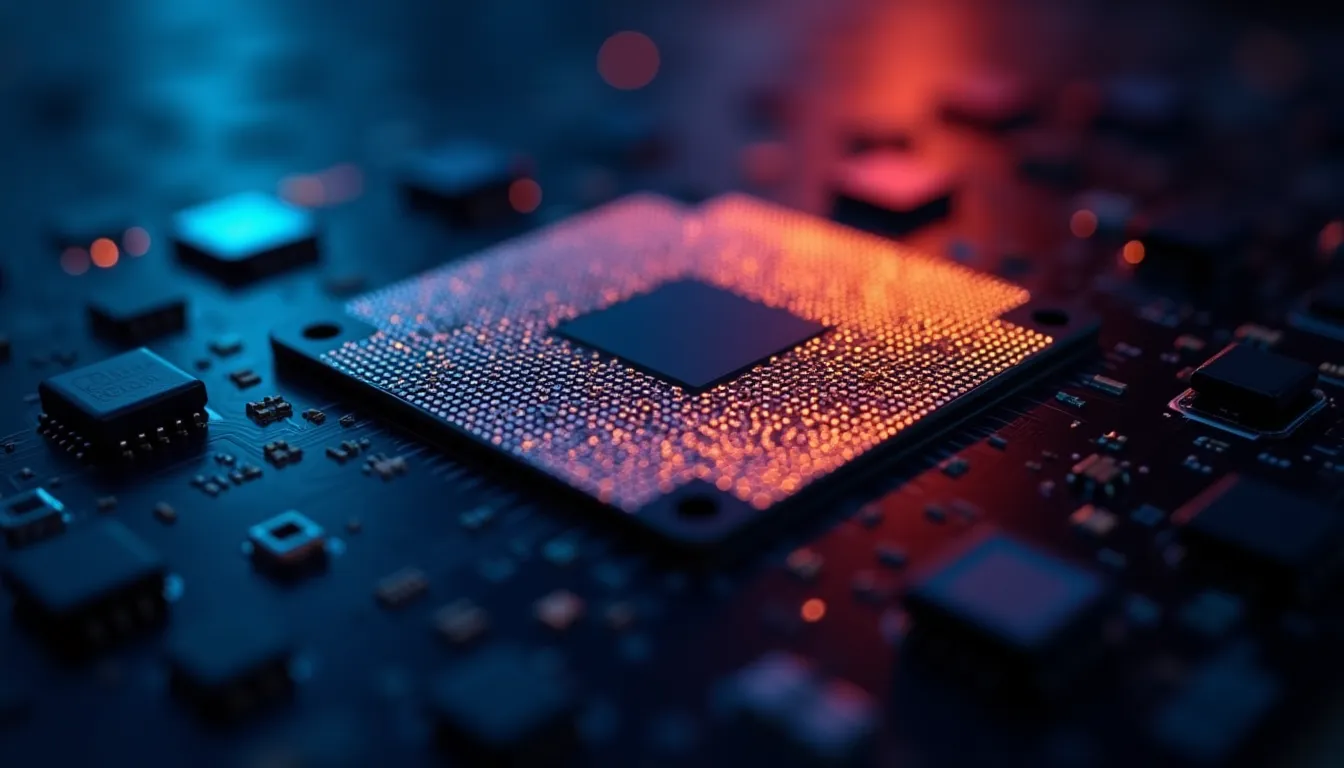
Cerebras unveiled its CS-4 AI chip with double the performance of its predecessor, while IBM revealed a mainframe processor that runs Arm and Z workloads on shared cores.
Key Takeaways
- Cerebras unveiled the CS-4 on August 24, 2026, delivering double the AI performance of its predecessor on the same chip area.
- IBM introduced a mainframe chip that runs both Arm and IBM Z instruction set workloads on the same physical cores - a first for the company.
- Spirit Electronics added Texas Instruments and Microchip Technology space-grade components to its online store ahead of SmallSat 2026.
- Cerebras has previously required U.S. export licences for chip sales to certain markets; the CS-4's performance jump is likely to attract renewed regulatory attention.
- IEEE Spectrum highlighted workforce adaptability and AI-integrated test platforms as critical enablers for engineers navigating fragmented hardware ecosystems.
Cerebras Systems has unveiled the CS-4, a next-generation AI chip that delivers double the compute performance of its predecessor on the same physical die, according to The Decoder - a development that arrives as competing chip architectures multiply and supply chain dependencies grow more strategically significant for governments and enterprises alike.
What Happened
The Decoder reported on August 24 that Cerebras has announced the CS-4, which achieves twice the performance of the CS-3 without increasing chip area. The company did not disclose the specific manufacturing node or release pricing, but the gain represents a significant step in the ongoing competition with Nvidia-dominated AI infrastructure. Cerebras has positioned its wafer-scale engine approach as an alternative architecture for large-model inference and training, and the CS-4 extends that differentiation. The announcement comes ahead of the company's efforts to expand commercial deployment following its previously reported challenges securing export approvals for sales to certain international customers.
In a separate but related development, VentureBeat reported that IBM has introduced a next-generation mainframe processor that is the first chip capable of running both Arm and IBM Z instruction set workloads on the same physical cores. This is a notable architectural decision: it allows enterprises running legacy Z-architecture workloads alongside modern cloud-native Arm software to consolidate onto a single platform. The move reflects IBM's recognition that its enterprise customer base increasingly requires hybrid compute environments rather than siloed architectures.
On the space-grade components front, SpaceNews reported that Spirit Electronics has added radiation-hardened and space-qualified components from Texas Instruments and Microchip Technology to its online store, timed ahead of the SmallSat 2026 conference. The expansion makes space-grade semiconductors more accessible to smaller satellite manufacturers - a supply chain development with direct implications for who can build sovereign space hardware and at what cost.
IEEE Spectrum also published analysis on AI-integrated test and measurement platforms, examining how trust and reliability are built into AI-connected systems used in critical infrastructure. A companion piece from IEEE Spectrum addressed the workforce dimension, outlining the skills engineers require to remain effective as hardware and software stacks fragment across competing ecosystems.
Why It Matters
The simultaneous emergence of Cerebras's wafer-scale approach, IBM's hybrid Arm-Z architecture, and the broader commercialisation of space-grade components from Texas Instruments and Microchip Technology illustrates a pattern that has significant geopolitical weight: chip architecture is fragmenting, and that fragmentation is not accidental. Each platform represents a deliberate choice about which supply chains, instruction sets, and vendor relationships an organisation depends on.
For policymakers and procurement offices, this fragmentation complicates interoperability and export control enforcement simultaneously. Cerebras's prior difficulties obtaining export licences for AI chip sales to certain markets show how performance gains immediately attract regulatory scrutiny. IBM's Arm-Z hybrid, meanwhile, offers enterprises a path to reduce single-vendor dependency - a consideration that resonates with national technology strategies from Brussels to Tokyo. Those interested in historical parallels for technology trade conflicts will recognise the pattern: performance inflection points in chip design have repeatedly triggered new rounds of export controls and industrial policy responses. The question is not whether governments will react, but how quickly.
Background
The competitive dynamics reshaping AI chip supply chains connect directly to foundry concentration risks explored in the MachineHours encyclopedia entry on TSMC's Monopoly - The Company the World Depends On. Because advanced chip fabrication remains concentrated at a small number of facilities, performance advances by any fabless designer - Cerebras included - ultimately flow through constrained manufacturing capacity. This gives chip architecture choices a geopolitical dimension that extends well beyond raw performance numbers.
The architectural diversity represented by IBM's Arm-Z hybrid also reflects tensions described in the Von Neumann Architecture - The Blueprint of Every Computer entry: as workloads diversify, the pressure to move beyond conventional processor designs accelerates, driving investment into specialised and hybrid silicon that resists easy standardisation across competing national technology programmes.
What to Watch
Three near-term signals will clarify how significant this week's announcements are. First, watch for Cerebras CS-4 export licence applications and whether U.S. Commerce Department guidance evolves to address wafer-scale engines specifically - the CS-3 precedent suggests this scrutiny will come. Second, monitor which enterprise customers publicly commit to IBM's Arm-Z hybrid platform; early adopters will reveal whether hybrid architectures gain traction as a sovereignty hedge or remain niche. Third, the SmallSat 2026 conference will show whether Spirit Electronics' expanded space-grade component catalogue accelerates procurement among non-traditional satellite builders, particularly those in markets that have historically relied on imported radiation-hardened components. Workforce adaptation - as IEEE Spectrum's engineering skills analysis underlines - will be a binding constraint on how fast any of these hardware shifts translate into deployed systems.
- Cerebras CS-4 delivers double the AI compute performance of the CS-3 on the same chip die, announced August 24, 2026.
- IBM's next-generation mainframe chip is the first processor to run Arm and IBM Z workloads on shared physical cores.
- Spirit Electronics expanded its online store with space-grade components from Texas Instruments and Microchip Technology ahead of SmallSat 2026.
- Cerebras has previously faced U.S. export licence requirements for AI chip sales to certain international markets, a regulatory pattern that CS-4's performance gains are likely to extend.
Sources
- The Decoder: Cerebras unveils CS-4 with double the performance on the same chip
- VentureBeat: IBM's next-gen mainframe chip is the first to run Arm and Z workloads on the same cores
- SpaceNews: Spirit Electronics Adds Texas Instruments and Microchip Technology Space Grade Components to Online Store
- IEEE Spectrum: Building Technology People Can Trust
- IEEE Spectrum: What It Takes to Be an Adaptable Engineer
- MachineHours Encyclopedia: TSMC's Monopoly — The Company the World Depends On
- MachineHours Encyclopedia: Von Neumann Architecture — The Blueprint of Every Computer
- MachineHours Encyclopedia: AI in Cryptocurrency — Algorithmic Trading, On-Chain Analytics, and AI Agents
Frequently Asked Questions
What is the Cerebras CS-4 and how much faster is it?
The Cerebras CS-4 is a next-generation AI chip that delivers double the compute performance of the CS-3 without increasing chip area. Cerebras did not disclose the specific manufacturing node or pricing at announcement.
What makes IBM's new mainframe chip significant?
IBM's chip is the first mainframe processor capable of running both Arm and IBM Z instruction set workloads on shared physical cores, allowing enterprises to consolidate legacy and cloud-native workloads on a single platform.
Why do space-grade chip components matter for geopolitics?
Radiation-hardened space-grade components are critical for satellite hardware. Broader commercial availability from suppliers like Texas Instruments and Microchip Technology affects which countries and organisations can build sovereign space infrastructure.
Could the Cerebras CS-4 face export restrictions?
Cerebras has previously encountered U.S. export licence requirements for AI chip sales to certain international markets. The CS-4's doubled performance is likely to bring renewed scrutiny from the U.S. Commerce Department.
What is SmallSat 2026?
SmallSat is a major small satellite industry conference. Spirit Electronics timed its addition of Texas Instruments and Microchip Technology space-grade components to its online store ahead of the 2026 event.
Get MachineHours in your inbox
AI compute and the machine economy in your inbox.